Life in Ideas
Outdoor Firewood Storage Ideas With a Covered Rack
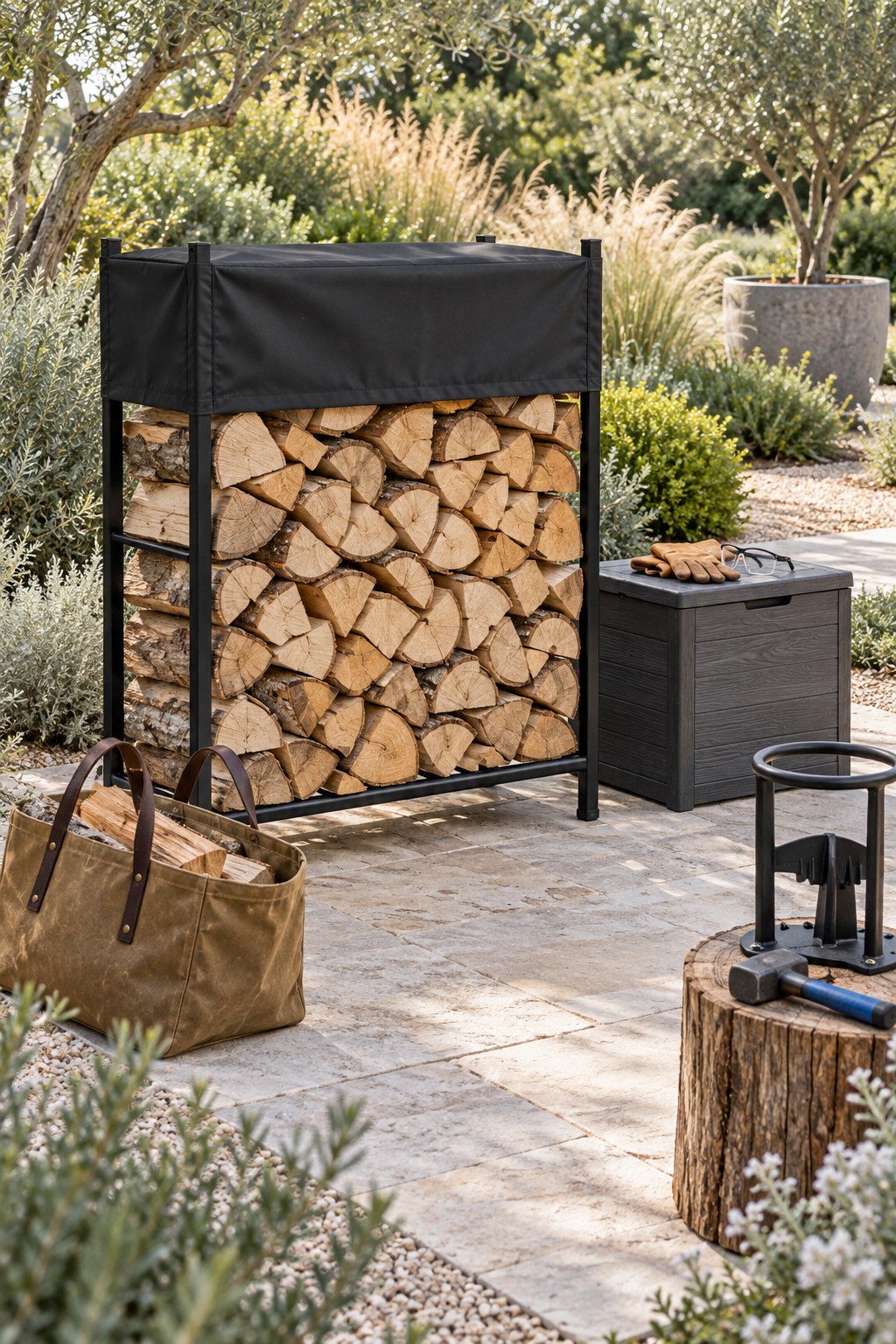
A tidy wood stack can feel at home in the garden when it has a clear place of its own. Here, a black rack and short top cover sit against soft planting, with pale paving keeping the arrangement light. A canvas carrier and a small grey tool box make the everyday trip for logs easier to manage.
Shop the Look
Scroll to Explore

Black Steel Rack With Top Cover
The main rack: a 48-inch square steel frame with a short seasoning cover that leaves the lower stack open to air.
View on Amazon ↗
Waxed Canvas Log Carrier
A structured canvas tote contains loose bark on the trip inside. Carry a comfortable batch, then empty and dry the bag after use.
View on Amazon ↗
Compact Grey Tool Box
A small resin box gives dry accessories a home beside the rack. Keep the lid clear to open; store electronic tools indoors afterward.
View on Amazon ↗
Leather Work Gloves
Cowhide palms help with rough bark during loading. Check the size chart; these work gloves are for handling cold wood.
View on Amazon ↗
Pin-Type Wood Moisture Meter
Check a freshly split interior face using the appropriate wood setting. Its reading is more useful than judging dryness from the bark.
View on Amazon ↗
Fiskars Log Tongs
Grip an individual log for a short move to the stack. Keep the pointed jaws away from the walking route and store the tool dry.
View on Amazon ↗
Optional Full Rack Cover
A fitted Woodhaven four-foot full cover for an already dry supply in exposed weather. Keep airflow in mind and check beneath it regularly.
View on Amazon ↗
Adjustable Rack Bracket Kit
An alternative for a custom-length rack using separately purchased lumber. Follow the kit instructions and include the finished timber frame in your measurements.
View on Amazon ↗
Ring Kindling Splitter
An optional prep tool for small, suitable pieces. Secure it to a stable base as instructed, with a separate clear space for working.
View on Amazon ↗
Three-Pound Hand Sledge
The manufacturer of the Original splitter recommends a three-pound club-style hammer. This short steel-handled option has a molded grip.
View on Amazon ↗
Clear Safety Glasses
Adjustable protective eyewear for the prep area. Check the fit before working and clean the lenses as directed so the view stays clear.
View on Amazon ↗
Upright Broom and Dustpan
Collect bark and chips from hard paving after refills. The covered pan helps contain loose debris; store the full-length set under shelter.
View on Amazon ↗As an Amazon Associate I earn from qualifying purchases. Affiliate Disclosure
More Firewood Storage Ideas

Give the Rack a Level Place to Stand
Start with a firm, level surface that drains well. The pale paving in this arrangement gives the rack a steady base and makes loose bark easy to sweep up. Keep the feet fully supported and the wood raised above ground moisture. Soft soil, a sloping path or an uneven stack can undermine even a substantial frame.
Choose an open position away from buildings, with room for air around the stack. Follow local pest and wildfire guidance for the actual separation your site needs. Leave a comfortable approach for carrying logs, and include any projecting ends of wood when measuring the space. A garden gate, a lid or a passing wheelbarrow should still open and move freely.
Cover the Top and Let the Stack Breathe
The short black hood is the useful detail here. It sheds rain from the upper rows while leaving much of the stack exposed to moving air. Split wood needs that airflow as it dries; wrapping fresh wood tightly on every side can hold moisture inside.
The separate full cover is an optional choice for an already seasoned supply in exposed weather. It replaces the short hood when that protection is appropriate; you do not need to layer both over the rack. Check underneath regularly and keep the wood ventilated. A cover helps manage rain, but it cannot turn wet logs into ready-to-burn fuel.
Use a wood moisture meter on a newly split interior face, with the correct setting and the instructions for that meter. A reading below 20 percent is a useful wood-burning benchmark. Drying time varies with species, split size, weather and storage, so the color of the bark or a date on the calendar is a poor substitute for checking the wood itself.
Measure for the Logs You Actually Buy
The Woodhaven frame measures 48 inches wide, 48 inches high and 14 inches deep. A longer log can project beyond that 14-inch depth, so mark out the loaded footprint as well as the steel frame. Keep the stack supported between the uprights rather than building a mound above them.
Its advertised quarter-cord capacity is based on 24-inch logs. A stack of shorter, 16-inch pieces will contain less wood, even with the same front view. Use the maker’s capacity assumptions when comparing racks, and check that the length of the fuel also suits your stove or fireplace.
For an awkward span, the MOFEEZ brackets offer a different route: a custom-length frame built with lumber bought separately. Allow for the finished timber and follow the kit instructions. The bracket dimensions alone do not describe the complete rack or establish its safe load.
Make the Trip Indoors Easy
A structured carrier gives a small refill a contained place to travel. The canvas bag measures about 23.4 inches long, 10 inches deep and 11.4 inches high, with open space above for the ends of longer pieces. Fill it to a weight you can comfortably lift, unload promptly and shake loose chips out outdoors.
Leather work gloves help when handling rough, cold logs, while tongs can make individual pieces easier to pick up. Let a wet bag and gloves dry before putting them away. Bring only a modest, ready-to-use supply into the house; the main stack can stay outdoors.
Keep the Small Tools Together
The grey resin box provides a quieter-looking home for dry accessories beside the rack. Its exterior is about 22.75 by 17.3 inches, with a height of 21.7 inches. Leave space for the lid to lift, and keep it closed when the work is finished. The box is weather-resistant storage for accessories; keep moisture-sensitive electronics indoors after use.
If you prepare your own kindling, give the ring splitter a separate, stable working spot and secure its base as instructed. The Original model is for smaller pieces that fit its opening. Its maker recommends a three-pound club-style hammer. Use suitable eye protection and follow both tools’ instructions; put tools away from children when finished.
A final sweep keeps the pale paving practical as well as good-looking. Bark and chips are easier to collect after each refill than after they become wet and scattered. The long broom and pan belong under shelter when stored, with the clear approach to the rack left open.
For more ways to store logs indoors and out, browse our firewood storage ideas.
Explore more indoor firewood storage ideas.
Explore more Outdoor Living.